How to Prevent Frozen Pipes, and What to Do If They Freeze (2026)
The average frozen-pipe claim at State Farm now tops $30,000. Here is how to prevent it, what to do in the first minutes if a pipe freezes, and what insurance will and will not pay.
Estimate at a glance2026
Keep the heat at 55°F or higher, let a pencil-thin stream of water run from faucets on exposed walls during hard freezes, and know where your main shutoff is. State Farm paid more than $628 million on over 20,000 freeze claims from January 2024 to June 2025, with an average claim above $30,000. Burst-pipe repair with damage typically runs $1,000 to $4,000, and water damage restoration averages about $3,868.
A frozen pipe is cheap to prevent and very expensive to ignore. Water expands as it freezes, pressure builds in the pipe, and when it finally bursts, often as things warm up, water pours into walls, floors and ceilings until someone shuts it off.
Why this matters more than people think
State Farm, the largest U.S. home insurer, paid more than $628 million on over 20,000 frozen-pipe claims between January 2024 and June 2025. The average claim was more than $30,000. That average has climbed quickly: in 2022 it was just over $20,000.
The states with the costliest freeze claims were Illinois, Oregon, Washington, Texas and Tennessee. Three of those five are not places most people picture as frozen. Homes in milder climates often run pipes through attics, crawl spaces and exterior walls with little insulation, so a rare hard freeze does outsized damage.
State Farm also notes that a crack just one-eighth of an inch wide can spill more than 250 gallons of water a day.
When pipes are at risk
State Farm's guidance is that once temperatures drop below 20 degrees Fahrenheit, there is a real risk of a pipe bursting. Risk rises with wind, long cold stretches, and pipes in unheated spaces such as garages, attics, crawl spaces and cabinets on outside walls.
Before winter: the prevention checklist
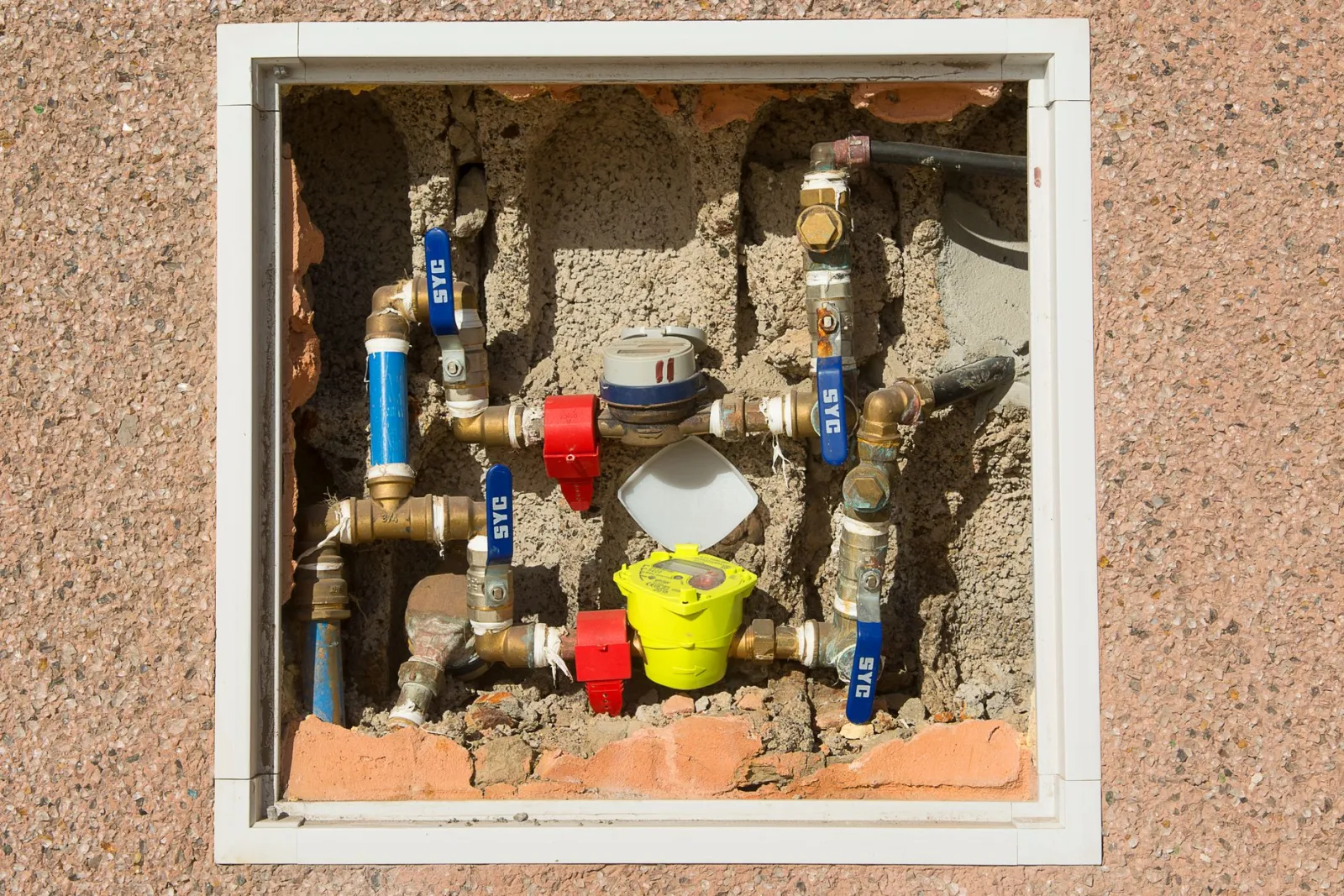
- Find and test your main shutoff valve. Label it so anyone in the house can find it.
- Insulate exposed pipes in attics, crawl spaces, garages and basements. Foam pipe sleeves are inexpensive at hardware stores.
- Seal air leaks near pipes, such as gaps where pipes pass through exterior walls.
- Disconnect garden hoses and shut off and drain outdoor spigots from inside if they have a separate valve.
- Consider heat cable on pipes that freeze repeatedly, installed according to the manufacturer's instructions.
- Service your heating system so it does not fail during the coldest week. See HVAC maintenance.
Where pipes most often freeze
- Pipes in exterior walls, especially under kitchen and bathroom sinks
- Lines running through attics, crawl spaces and garages
- Outdoor spigots and hose bibs
- Pipes near foundation vents or gaps where cold air leaks in
- Supply lines to ice makers and laundry rooms on outside walls
Walk your house once before winter and note each spot. Those are the places to insulate, seal and watch during a cold snap.
During a hard freeze
- Keep the thermostat at 55°F or higher, day and night, even if you are away.
- Let faucets drip. State Farm recommends a pencil-thin stream overnight from faucets on exterior walls. Moving water is much harder to freeze.
- Open cabinet doors under sinks on outside walls so warm air reaches the pipes.
- Keep the garage door closed if water lines run through it.
If a pipe freezes
Signs: a faucet produces only a trickle or nothing, frost on a visible pipe, or a bulge in the pipe.
- Keep the faucet open. As the ice melts, running water helps thaw the rest.
- Apply gentle heat with a hair dryer, heat lamp or space heater kept safely away from anything flammable. State Farm recommends starting near the faucet and working toward the frozen section.
- Never use an open flame, such as a torch. It is a fire risk and can damage the pipe.
- Check other faucets. If one pipe froze, others may have too.
- Call a plumber if you cannot find or reach the frozen section.
If a pipe bursts
- Shut off the main water valve immediately.
- Turn off electricity to wet areas if you can do it safely.
- Photograph everything before cleanup.
- Call your insurer and a plumber.
- Start drying within 24 to 48 hours to limit mold.
What repairs cost in 2026
| Item | Typical cost |
|---|---|
| Burst pipe repair plus associated damage | $1,000 to $4,000 (Angi) |
| Pipe repair per linear foot | $150 to $250 (HomeGuide) |
| Water extraction and drying | $4 to $12 per square foot (HomeGuide) |
| Water damage restoration, average | About $3,868; range $450 to $16,000 (Angi) |
Large events with soaked walls, floors and ceilings are what push insurance claims into the tens of thousands.
What insurance covers, and the fine print
Standard homeowners policies generally cover sudden and accidental water damage from a burst pipe. The catch is care: policies can exclude freeze damage if the home was not kept heated, or if the water was not shut off and the pipes drained while the home was vacant. Read your policy's freezing and vacancy language before you travel in winter.
Two more tips:
- Be careful with assignment of benefits forms from restoration companies. Read before you sign anything that lets a contractor deal directly with your insurer.
- Document your prevention steps, such as a thermostat set to 55°F, in case the insurer asks.
If you travel in winter
- Keep the heat on, at 55°F or higher
- Ask someone to check the house daily
- Consider shutting off the main water and draining the lines, but note that this also disables any fire sprinkler system
- Install a smart leak sensor or water shutoff; see signs of a hidden water leak
After the thaw: check for hidden damage
Some pipes crack during the freeze but only leak once they warm up. After any hard freeze, check under sinks, in the basement and crawl space, and around the water heater. Watch your water meter with all fixtures off, as described in our hidden leak guide. A small drip found early costs far less than a soaked subfloor found weeks later.
For more on water problems and costs, read roof leak: what to do first and the plumbing costs guide.
Questions homeowners ask
At what temperature do pipes freeze?
Risk rises as temperatures fall, and State Farm warns that below 20°F there is a real risk of a pipe bursting, especially for pipes in unheated spaces.
What temperature should I keep my house when I'm away in winter?
At least 55°F, day and night, according to State Farm's guidance.
Should I let faucets drip?
Yes, during hard freezes. State Farm recommends a pencil-thin stream overnight from faucets on exterior walls.
How do I safely thaw a frozen pipe?
Keep the faucet open and apply gentle heat with a hair dryer, heat lamp or space heater, starting near the faucet. Never use an open flame.
Does homeowners insurance cover burst pipes?
Usually for sudden and accidental damage, but policies can exclude freeze damage if the home was not heated or the water was not shut off while vacant.
How much does it cost to fix a burst pipe?
Burst pipe repair with associated damage typically runs $1,000 to $4,000, and water damage restoration averages about $3,868 according to Angi.
Sources
- State Farm Newsroom: Frozen pipes, beat winter water woes (2026)
- Carrier Management: Frozen pipes lead to $628M in losses for State Farm (Jan 2026)
- State Farm Newsroom: Water and ice, not so nice
- Angi: Water damage restoration cost (2026)
- HomeGuide: Water damage restoration cost (2026)
- U.S. EPA: A brief guide to mold, moisture and your home
Was this guide helpful?
Thank you. Your answer helps us decide what to update first.