Solar Battery Storage in 2026: Cost, Payback and Whether It Is Worth It
A home battery now costs about $15,600 installed before incentives, and the federal credit is gone. Here is when storage still earns its place.
Estimate at a glance2026
A typical home battery costs about $15,647 installed for 13.5 kWh before incentives, according to EnergySage's 2026 quote data. The Tesla Powerwall 3 averages about $13,473 installed, roughly $998 per kWh. The federal 30% credit ended for 2026 purchases, so a battery pays off mainly where outages are frequent, export credits are low, or utilities and states offer incentives.
A home battery does two jobs: it keeps the lights on when the grid goes down, and it can lower your bill by storing solar power for later. In 2026 the federal credit that covered 30% of the cost is gone, so it is worth being clear about which job you are paying for.
What batteries cost in 2026
| Measure | 2026 figure | Source |
|---|---|---|
| Typical installed battery, 13.5 kWh | About $15,647 before incentives | EnergySage, first-half 2026 quotes |
| Tesla Powerwall 3, typical installed | About $13,473, about $998 per kWh | EnergySage |
| Price range across top brands | About $342 to $3,505 per kWh | EnergySage |
The Powerwall 3 is about 13% below the marketplace average and held 61% of EnergySage marketplace share in the second half of 2025. It stores 13.5 kWh, delivers up to 11.5 kW continuously, and has a built-in inverter.
The huge per-kWh range shows why you should compare quotes on price per kWh of usable storage, not just the total.
The tax credit is gone
The residential clean energy credit, which covered 30% of battery costs, does not apply to expenditures after December 31, 2025. Some pages, including a few installer and review sites, still show "net cost after the 30% credit." For a 2026 purchase, that math is wrong. Check your state and utility for programs that remain.
Job 1: backup power
A battery keeps essential circuits running during an outage, silently and without fuel. How long it lasts depends on what you run. Low-power essentials such as the refrigerator, lights, internet and a gas furnace's blower can run far longer than central air conditioning or an electric range.
Continuous output matters as much as storage. A battery rated at 11.5 kW continuous can run more at once than a smaller unit, even with the same kWh.
Backup makes the most sense if:
- Outages are frequent or long where you live
- Someone in the home relies on powered medical equipment
- You have a well pump or sump pump that must keep running
- A standby generator is impractical or not allowed
Job 2: lowering your bill
A battery can store solar power produced at midday and use it in the evening, when electricity is often priced higher under time-of-use rates.
This matters most under net billing, where utilities credit exported solar power at a low rate. California's net billing tariff, often called NEM 3.0, credits exports well below the retail price, so storing your own solar power is worth more than sending it to the grid. Under traditional net metering, where exports earn close to retail, a battery adds much less bill savings.
Some utilities also run virtual power plant programs that pay battery owners to share stored power during peak demand. Terms vary widely, so check your utility's current program.
How big a battery do you need?
Start with what you want to power, not the battery size:
- Essentials only (refrigerator, lights, internet, furnace fan, a few outlets): one battery around 13.5 kWh is a common starting point.
- Whole-home backup including central air, an electric range or a well pump: usually more storage and higher continuous output, often two or more units.
- Bill savings only: size to the evening energy you use after the sun sets, which your installer can estimate from your utility data.
Ask your installer to show which circuits the battery will back up and roughly how many hours it can run them.
Battery or generator?
| Home battery | Standby generator | |
|---|---|---|
| Noise and fuel | Silent, no fuel | Runs on natural gas or propane, with engine noise |
| Outage length | Limited by storage, extended if solar recharges it | Runs as long as fuel lasts |
| Bill savings | Yes, with solar and time-of-use rates | None |
| Maintenance | Minimal | Regular engine servicing |
Many homeowners in areas with long outages pair solar and a battery for daily use with a generator for rare multi-day events.
Warranties and lifespan
Battery warranties are measured in years and remaining capacity. Tesla's Powerwall warranty is 10 years, and some competitors, such as FranklinWH and Enphase, advertise 15-year warranties, according to a 2026 installer comparison. Read the warranty document itself for capacity retention terms, throughput limits and any requirement to keep the battery connected to the internet.
Is it worth it for you?
Probably yes if:
- You face frequent or long outages
- Your utility uses net billing with low export credits
- Time-of-use rates create a big gap between daytime and evening prices
- State, utility or virtual power plant incentives lower the cost
Probably not if:
- Outages are rare and short
- You have full retail net metering
- You are buying mainly for bill savings without incentives
- A portable or standby generator meets your backup needs for less
Before you buy
- Decide whether backup or bill savings is your main goal
- List the circuits you want to back up
- Compare quotes on price per usable kWh and continuous kW
- Confirm the warranty terms in writing
- Make sure the quote does not subtract a federal credit
Installation details to check
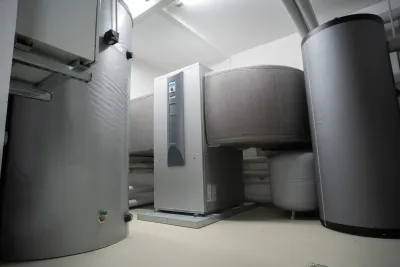
Batteries are usually mounted in a garage, on an exterior wall or in a utility area, following the manufacturer's clearance and temperature rules. Most jobs need an electrical permit and inspection, and some homes need panel changes to add backup circuits. Ask the installer to include permits, any panel work and utility interconnection paperwork in the quote.
If you do not have solar yet, start with whether solar is worth it in 2026, and before signing, read how to vet a solar installer. Batteries may also require panel work; see electrical panel upgrade.
Questions homeowners ask
How much does a home battery cost in 2026?
About $15,647 installed for 13.5 kWh before incentives, according to EnergySage's first-half 2026 quote data.
Is there still a federal tax credit for solar batteries?
No. The residential clean energy credit does not apply to expenditures after December 31, 2025. Some states and utilities still offer incentives.
How much does a Tesla Powerwall 3 cost installed?
About $13,473 on average, roughly $998 per kWh, according to EnergySage.
How long do home batteries last?
Warranties typically run 10 to 15 years with capacity-retention terms. Tesla's Powerwall warranty is 10 years; some competitors offer 15.
Is a battery worth it under NEM 3.0?
It is more valuable under net billing, because storing your own solar power is worth more than exporting it at a low credit rate.
Battery or generator: which is better?
Batteries are silent and fuel-free and can cut bills with solar; generators can run longer in extended outages and often cost less for backup alone.
Sources
- EnergySage: Solar battery cost (2026)
- EnergySage: Tesla Powerwall 3 review (2026)
- NRG Clean Power: Solar battery cost and warranty comparison (2026)
- Congressional Research Service: Expiration of the residential clean energy credit
- California Public Utilities Commission: Decision 22-12-056 (net billing tariff)
Was this guide helpful?
Thank you. Your answer helps us decide what to update first.